+385 98 258 761
 info@apartmentsrab-lapida.com
+385 98 258 761
info@apartmentsrab-lapida.com
info@apartmentsrab-lapida.com
+385 98 258 761
info@apartmentsrab-lapida.com


the best choice of accommodation in Apartments & Villa Lapida.
 Apartments Lapida
Simply and functionally furnished Apartments located in a family house with several apartments. House position is ideal for those who want to spend a quiet holiday as soon as.
 Villa Lapida
The house is situated in an attractive pool for many delights, while on the ground floor are billiards and darts for a pleasant gathering. From the balcony and terrace offers a breathtaking view of the Supetarska Draga.
 Island Rab
The island of Rab was first mentioned in a Greek source Periplus of Pseudo-Scylax (360 BC) and then by other Greek and Roman geographists by the name Arba. That name belonged to the Liburnians, so far the oldest known inhabitants of the island.

Apartment 1
apartments for six persons

Apartment 2
apartments for two persons

Apartment 3
apartments for two persons

Apartment 4
apartments for two persons
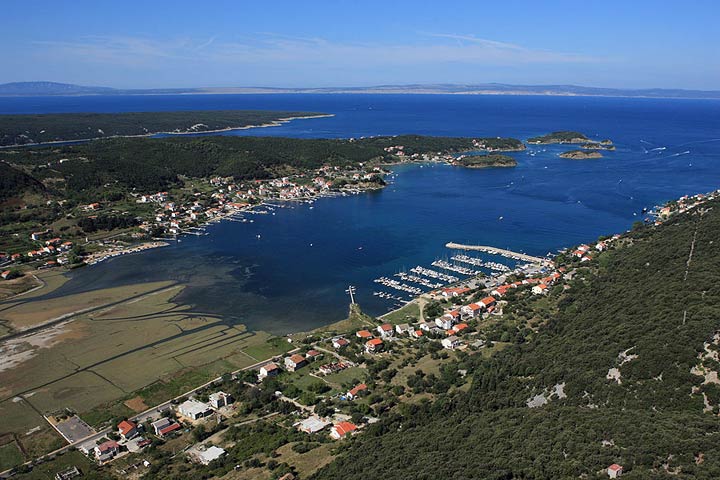
Supetarska Draga is the name of the town and the bay which is a natural extension of the most fertile and biggest field on Rab. The name comes from the church and the Basilica of St. Peter built in the 11th century. As the church has not been changed significantly over the centuries, today it is said to be the only Romanesque church in the Adriatic that has remained in use and unchanged for 900 years. The settlement of Supetarska Draga was raised by the diligent hands of Rab fishermen, but apart from fishing, the main activity of the locals today is, of course, tourism. This is real little tourist paradise, because in front of the bay there are three small islands with beautiful sandy beaches. In this magical place lies the ACI Marina Supetarska Draga, which elevates the overall tourist offer of this picturesque area of the island.
One of the oldest island villages, with a particularly rich nautical tradition, surrounded by nearby islets full of sandy and pebbly beaches, good restaurants, traditional produce, accommodation on land and sea and everything the small-scale mariner might need.
The island of Rab was first mentioned in a Greek source Periplus of Pseudo-Scylax (360 BC) and then by other Greek and Roman geographists by the name Arba. That name belonged to the Liburnians, so far the oldest known inhabitants of the island. Arba was also the name of the Liburnian settlement in the modern city of Rab. It is not certain how old this name is; it may be as old as the settlement, which means from the beginning of the Iron Age, since the Liburnians did not build the city walls on the island. The Illyrian-Liburnian word Arb meant 'dark, obscure, green, forested'. Therefore name Arba should be comprehended as a toponym meaning "Black island", due to the rich pine forests that once grew on the island. After the 1st century AD it was recorded by many other Greek and Roman authors by the names Arba and Arva. Its Medieval Dalmatian speaking population used Arbe, Arbia, Arbiana, Arbitana and most frequently Arbum in the documents written in the Latin language. Arbe became also the Venetian name of the city in the 15th century when it fell under the authority of the Republic of Venice. In the Croatian language it became Rab, a form which probably goes back as far as the 7th century when the Slavs began to settle on the island. However the first record of name Rab is preserved only in the middle of the 15th century (in a Latin document relating to the establishment of the Franciscan monastery of St. Eufemija), since the major establishment of Croatian inhabitants in the city did not occur before the 10th century, unlike the rest of the island and region.
The island is first heard of under the Illyrians in 360 BC. It was part of Liburnia and then part of the Roman Empire. The emperor Octavian Augustus built town walls and gave Rab the title of Municipium. Saint Marinus, the founder of the mini-state of San Marino, originated on Rab, whence he fled during the religious persecutions of the Emperor Diocletian (this ancient tie is commemorated in the present twin-city agreement between Rab and San Marino). The earliest bishop of Arba whose name is preserved in an extant document is Titianus, a participant in a council held in 532 Salona, the metropolitan see of which Arba was a suffragan. On 17 October 1154, Arba was attached instead to the archdiocese of Zadar. By the papal bull Locum beati Petri of 30 June 1828, the history of the diocese as a residential see came to an end and its territory was united with that of Krk. No longer a residential bishopric, Arba is today listed by the Catholic Church as a titular see. During the Middle Ages Rab was part of the Byzantine Empire, then, for a short time, part of the Kingdom of Croatia. In 1000 the island, together with the many other islands and cities of Dalmatia, submitted to the Republic of Venice. In 1358 the island came under the rule of King Louis the Great, the Angevin ruler of Hungary. During the Renaissance it was ruled by Venice from 1409 until the end of 18th century followed by a brief interlude under Napoleon. It was eventually annexed by the Habsburgs in 1815 and remained under Austrian rule till 1918. Since a majority of its residents were Italian-speaking, the locals sought to be annexed to the Kingdom of Italy, but Italy eventually decided to cede the island to Yugoslavia in 1921, and many of its Italian-speaking residents subsequently left for Istria and the rest of Italy. During World War II, the forces of Fascist Italy established the Rab concentration camp on the island. A memorial complex built in 1953 commemorates the site of the former camp, located in the village of Kampor. After the Second World War, the island was part of the Socialist Federal Republic of Yugoslavia until the Croatian independence referendum in 1991. The island of Rab is rich in cultural heritage and cultural-historical monuments that make it a popular vacation destination. Rab is also known as a pioneer of naturism after the visit of King Edward VIII and Mrs Wallis Simpson. The island is nowadays very popular with tourists and families for its beautiful nature, beaches, heritage and many events, particularly the Rab arbalest tournament and the Rab Medieval festival - Rapska Fjera.
Feel free to contact us for info about our Villa or Apartments.
 Supetarska Draga, Rab, Croatia
 +385 98 258 761